About Us

Building Community Energy and Food Security
Our mission is to pioneer an equitable and inclusive energy future in the United States by leveraging premium, high-resolution energy data and developing comprehensive metrics that reflect the diverse experiences of all communities, especially those marginalized by the current system.
Naomia A. Suggs-Brigety
Chief Executive Officer, Co-Founder
Naomia's journey to Recharge began during her doctoral research at George Washington University when she was asked to use a community garden as a focal point for energy studies—a moment that crystallized the fundamental interconnection between energy equity and food security. Her path to this realization was shaped by years of working across technical infrastructure, policy, and research: as a civil engineering graduate from Jackson State University who worked as a Bridge Designer at the Mississippi Department of Transportation, she understood how built systems are designed and maintained; as Professional Staff on the U.S. House Committee on Foreign Affairs, she learned how policy decisions shape communities' access to resources; and through her graduate research in International Development Studies at GWU, she developed methodologies to center marginalized voices in systems analysis. This combination of expertise revealed that existing energy metrics failed to capture the lived realities of underserved communities, particularly in urban areas where geographic and economic separation makes it easier to overlook critical disparities in infrastructure performance and health outcomes.
At Recharge, she leads the development of high-resolution residential energy data collection systems and novel modeling approaches that account for the unique energy use patterns of marginalized communities—including differences in housing stock and disproportionate urban heat island impacts often overlooked by conventional analysis. Using community gardens as direct teaching mechanisms, Naomia teaches all four pillars of energy justice (recognitional, procedural, distributional, and restorative) to empower communities with the literacy and tools needed to advocate for their own energy needs with decision-making stakeholders. Her work conducting energy system analysis spans both residential energy use and grid-scale energy resource planning, grounded in community-based participatory research methodologies that center marginalized voices in the energy transition.

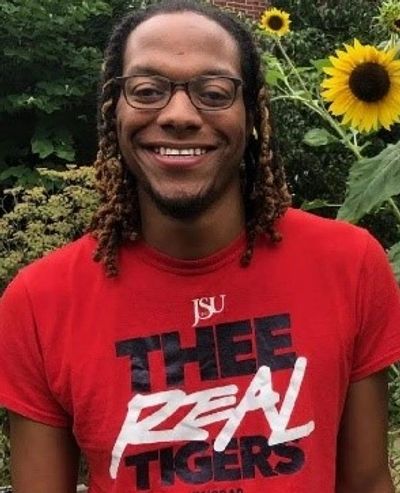
Jonathan A. Rosser
Chief Communication Officer, Co-Founder
Jonathan's path to Recharge was shaped by a decade of confronting food deserts and building equity-centered programs across underserved communities throughout Mississippi and beyond. After witnessing how the Mississippi Delta—a breadbasket for much of the country—remained plagued by food insecurity among its predominantly Black residents, he developed comprehensive approaches to food justice through his work with FoodCorps and later with Greener Partners, combining hands-on community programming with the communication expertise he honed through graduate studies at the University of North Carolina at Greensboro and strategic leadership training at Harvard Business School. His foundation in speech communication and rhetoric from Jackson State University, where he also served in numerous student leadership roles, prepared him to design programs that center community voices and shared leadership. As a long-time member and Alumni Ambassador of Art, Poetry & Justice—a BIPOC creative collective in Jackson, Mississippi that uses art as a social mirror for society—Jonathan brings a unique understanding of how tangible spaces can serve as platforms for community reflection and transformation, an approach that directly informs Recharge's model of using gardens as sites of learning and empowerment.
At Recharge, he leads program development focused on eliminating food insecurity through kitchen and community gardens, including building cross-organizational partnerships, teaching seed saving and preservation techniques, developing educational materials on food waste reduction and nutrition, and establishing community garden sites in Philadelphia and Washington, DC. His work recognizes that healthy, well-rounded diets are not ancillary to energy justice but foundational to it—communities cannot fully participate in civic life, including energy advocacy, when facing nutritional insecurity. Drawing on his communication expertise and decade of equity-centered program design, Jonathan creates learning experiences where gardens serve as direct teaching mechanisms for both food sovereignty and energy literacy, addressing the interconnected systems that shape community well-being.